

The rapid rise of AI technology will reshape the workforce of the entire science and technology industry, particularly in 2025, when the global science and technology industry is undergoing a serious test. According to external media reports, the number of layoffs in major technology enterprises has exceeded 100,000 in 2025 to date. Microsoft, Intel, Google, Amazon, etc., have shrunk their teams and have generally cited the slowdown in growth, rising operating costs and the transition to artificial intelligence and automation as contributing factors.
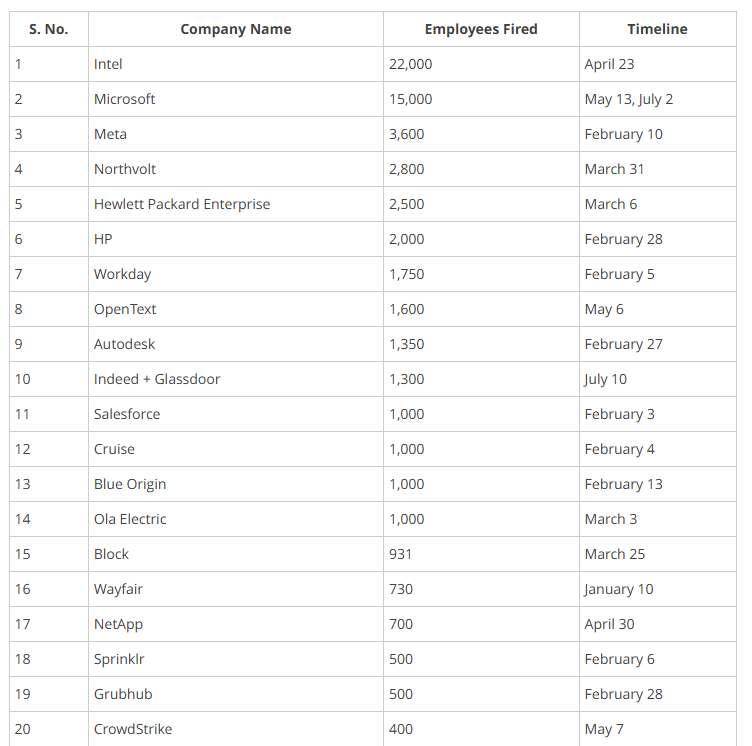
Data on part of the downsizing of technology enterprises
This loss of staff, which engulfs the world and affects staff at all levels (from the time of their birth to the time of their senior engineers), although declared necessary by companies to “optimise their operations and shape their future”, has had a dramatic impact on practitioners and on the market for scientific and technological employment. The dramatic changes in the industry are not only a result of a reduction in human capacity, but also of the fundamental transformation of the development model — the enterprise’s effort to create a more streamlined and efficient AI-driven system by dismantling its traditional team and destabilizing its work model.
Microsoft confirmed that approximately 9,100 staff would be abolished by July 2025, a second round of large-scale layoffs following the departure of 6,000 engineering and industrial staff in May. This round of retrenchment represents 4 per cent of the nearly total number of employees, affecting the Xbox game department, the sales team, the law department and mobile game development groups such as the Candy Legend. Microsoft announced that it would invest $80 billion to restructure AI infrastructure, synchronize sales structures and scale up outsourcing.

Intel, the global semiconductor giant, plans to reduce the total factory workforce by 20 per cent (over 10,000 people) by mid-July, with the St. Clara headquarters in Silicon Valley occupying 107 posts. At the same time, the company shuts down the much-suspected car chip sector, highlighting its determination to break down its financial austerity policy. Faced with the shrinking demand in the PC and server markets, Intel is moving to the AI chip and the next generation of computing techniques.
The Google TV team suffered a 25 per cent reduction (approximately 75) and the budget of the sector was reduced by 10 per cent in parallel. In June, the company had launched a buyout and voluntary separation plan, which foreshadowed or increased staff reductions during the year. Like other technology enterprises, Google is tilting resources away from low-priority product lines towards AI R & D.
In 2025, the Amazon joined the retrenchment force and, in June, took the lead in abolishing nearly 100 posts in the library sector, affecting the Kindle and Goodreads teams. In an internal memorandum, CEO Andy Jassi stressed that the alternative effect of generating AI on repetitive work would continue to drive enterprises to lose weight. Client services, software development, human resources and mid-level management positions are more at risk in the future. The Amazon has accumulated more than 27,000 staff reductions since 2022, and the principle of efficiency priorities has been reinforced in the era of digital change.

Rapid development and automated application of artificial intelligence is considered to be one of the main drivers of the 2025 workforce loss. Businesses spend hundreds of millions of dollars on layout and automation, making traditional jobs strategic victims. At the same time, rising interest rates, increased inflation and slower growth forced enterprises to streamline the non-core sector. A survey by the World Economic Forum (WEF) shows that 41 per cent of global companies expect to reduce their workforces due to artificial intelligence over the next five years.
Microsoft has disclosed that AI has prepared its 20-30 per cent code, reducing the demand for some engineers. In King ‘ s review, AI replaced user research and writing tools, which were developed by staff retrenchment and provoked strong dissatisfaction. Amazon and Meta utilize AI automated passenger service, human resources and middle management tasks. The Amazon plan is to upgrade the ratio of promotion to product manager through the AI reduction management system. The game sector decisions of Sony and Microsoft, on the other hand, reflect a shift from a large budget to a low-risk game.

This reduction affected a wide range of people, including mid-level developers and engineers in Intel and Microsoft; marketing, marketing and legal teams; the play and entertainment sector; and regional offices, particularly in the United States and India.
This indicates that no category of work is immune. Even highly performing technical staff are affected when their responsibilities are inconsistent with corporate priorities.